
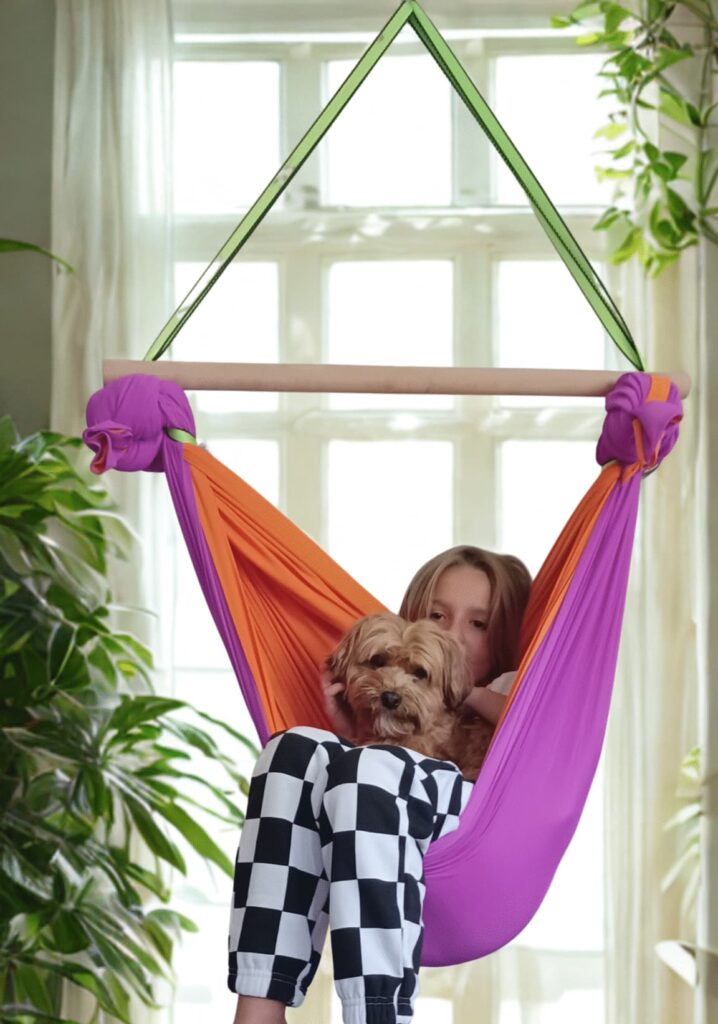
Sensory Swings at Home: How to Use Them for Regulation Without Causing Meltdowns
If you’ve ever walked into an occupational therapy gym, you’ve probably seen sensory swings in use. Platform swings. Cocoons. Bolsters. Trapeze bars.
Parents often leave those sessions wondering why swinging works so well in therapy, and whether a sensory swing at home will help their autistic or ADHD child regulate too.
Sometimes it does.
Sometimes it makes things worse.
The difference is not whether sensory swings work.
It’s how they are designed, how they are used, and whether they are suited for real homes instead of controlled clinical environments.
Parents searching for a sensory swing at home are usually looking for help with autism, ADHD, sensory processing differences, anxiety, and regulation. While sensory swings are common in occupational therapy clinics, home use introduces different challenges, and many popular swing designs unintentionally increase dysregulation.
Written by Divergent Kids.
What Sensory Swings Actually Do
Sensory swings primarily affect two systems:
- The vestibular system, which processes movement, balance, and spatial orientation
- The proprioceptive system, which processes pressure, joint input, and body awareness
In occupational therapy, swings are used intentionally. A therapist adjusts speed, direction, duration, and body position in real time based on how the nervous system responds.
At home, that modulation usually disappears.
Most parents are not told that different swing designs and fabrics produce very different nervous system responses, even when the swing looks “calming” on the surface.
Calming vs Alerting Sensory Swing Input
This distinction determines whether a sensory swing supports regulation or leads to overstimulation.
Calming sensory swing input is usually:
- Slow and predictable
- Linear rather than spinning
- Responsive to the body’s movement
- Paired with even, gentle compression
Alerting sensory swing input is usually:
- Fast or rotary
- Unpredictable
- Suspended from above rather than supported
- Lacking compression or pressure feedback
Alerting input is not inherently bad. But when a child needs calming, alerting swings often increase arousal, emotional escalation, and meltdowns, especially at home where there is no therapist actively adjusting the input.
Why Sensory Swings That Work in OT Clinics Often Fail at Home?
OT clinics are controlled environments. Sessions are time-limited. Input is carefully dosed. Therapists intervene before dysregulation builds.
Homes are not controlled environments.
At home, sensory swings often fail because:
- The swing design prioritizes movement over regulation
- The fabric does not stretch or respond to the body
- Movement becomes unpredictable or continuous
- The body is suspended rather than supported
- The nervous system never receives a sense of “holding”
These factors can turn a well-intentioned sensory tool into a source of overstimulation within minutes.
Why Cocoon-Shaped Sensory Swings Often Cause Dysregulation at Home?
Many sensory swings sold for home use are cocoon or pod shaped, narrowing toward the top and made from thin, non-stretch fabric.
While these swings appear enclosed, they often:
- Suspend the body from above rather than supporting it
- Encourage hunching or inward collapse
- Provide little true compression or pressure feedback
- Allow movement without grounding
For many autistic and ADHD nervous systems, this combination increases discomfort rather than regulation. The body is hanging, not held. The nervous system stays alert instead of settling.
Parents often describe these swings as “fun but wild,” “stimulating but not calming,” or “great at first, then a disaster.”
How Compression Sensory Swings Behave Differently?
A compression sensory swing works differently from a cocoon. Instead of relying on shape, it relies on fabric behavior.
Thick, stretch-based compression fabric:
- Wraps evenly around the body
- Responds to movement instead of resisting it
- Provides consistent pressure without weight
- Allows gentle bouncing and settling
- Creates a close, holding sensation many describe as womb-like
Open-top compression designs allow the spine to remain more neutral while still providing deep, even pressure. For many users, this reduces postural strain and increases the feeling of safety.
The difference is not enclosure.
The difference is how the fabric interacts with the nervous system.
Why Compression Plus Movement Matters More Than Weight?
Weighted blankets are often recommended for sensory regulation, but many kids reject them.
Common reasons include:
- Restricted movement
- Overheating
- Feeling trapped rather than supported
Compression sensory swings allow movement and pressure at the same time. The body can push back, shift, and adjust while still receiving calming input.
For many autistic and ADHD nervous systems, this combination is more regulating than weight alone, especially for those who seek movement but also need grounding.
This is also true for many neurodivergent adults who use movement to regulate anxiety, focus, or emotional overload.
How Divergent Kids Designs Sensory Swings for Home Regulation?
Divergent Kids did not set out to create another generic sensory swing.
The question was simple:
Why do so many swings overstimulate kids or end up unused at home?
Design priorities were:
- Thick, stretch compression fabric that hugs rather than suspends
- Open-top design to avoid forced hunching
- Breathable material to prevent overheating
- Durable construction for teens and adults
- Apartment-friendly indoor mounting
- Designed first for calming regulation, not stimulation
The goal was never more sensory input.
The goal was input the nervous system can actually tolerate and trust.
How to Choose a Sensory Swing for Home Use?
Before buying or DIY-ing a sensory swing, ask:
- Does the fabric stretch and respond, or is it stiff?
- Does the swing support the body or hang it from above?
- Can movement stay slow and predictable?
- Will the fabric overheat during use?
- Does the swing feel calming or energizing?
If those answers are unclear, the swing is unlikely to support regulation at home.
See our Sensory Swing for Autism and ADHD.
Common Questions Parents Ask
Yes, when it provides predictable movement combined with compression. Many ADHD kids become more dysregulated with fast or spinning swings.
Yes. Overstimulating movement, lack of compression, or poor design can push the nervous system into overload.
For many children, yes. Compression swings allow movement plus pressure, while weighted blankets restrict movement and can cause overheating.
Yes. Many adults use compression sensory swings for regulation, anxiety reduction, focus, and nervous system reset.
Final Thought
Sensory swings are powerful tools, but they are not neutral ones.
Used thoughtfully and designed well, they can support regulation, focus, and recovery. Used poorly, they can increase dysregulation and stress.
The goal is not more stimulation.
The goal is felt safety.
Divergent Kids
Share:
Facebook
Twitter
Pinterest
LinkedIn